
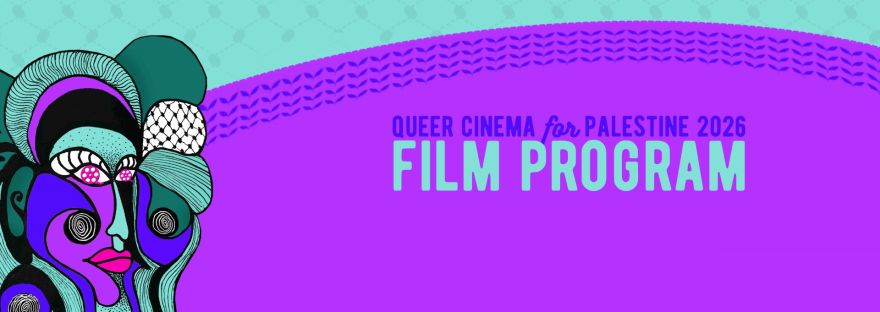
Queer Cinema for Palestine (QCP) announces No Pride in Genocide (June 2026), a global film event, co-organized by the Palestinian Campaign for the Academic and Cultural Boycott of Israel (PACBI). The fourth edition of QCP invites grassroots, solidarity and arts organizations across the world to host screenings of a stellar collectively curated short film program throughout the month of June 2026.
Queer Cinema for Palestine began as an alternative ethical space for filmmakers who pulled or refused to show their work in the Israeli government-sponsored TLVFest LGBTQ Film Festival. Over the past six years, hundreds of filmmakers have shown their solidarity in response to the boycott call from queer and trans Palestinians. As Israel continues its genocide and ethnic cleansing in Gaza, the West Bank, and across historic Palestine, we condemn this violence and stand in solidarity with Palestinians.
Israel continues to attempt to instrumentalize our identities as queer and trans people to justify its genocide against Palestinians, including murdering, blackmailing, and imprisoning queer and trans Palestinians. Accordingly, our festival will take place during June 2026, the month that marks Pride in many countries worldwide. We do so to continue our refusal of Israel’s pinkwashing. This year’s program focuses on the work of queer, Palestinian, and allied artists, across locales, in historic Palestine and the diaspora, identities, lengths, styles and genres (doc-hybrid, experimental, fiction, and animation) to highlight art’s position in resistance and the struggle for liberation.
Film Program
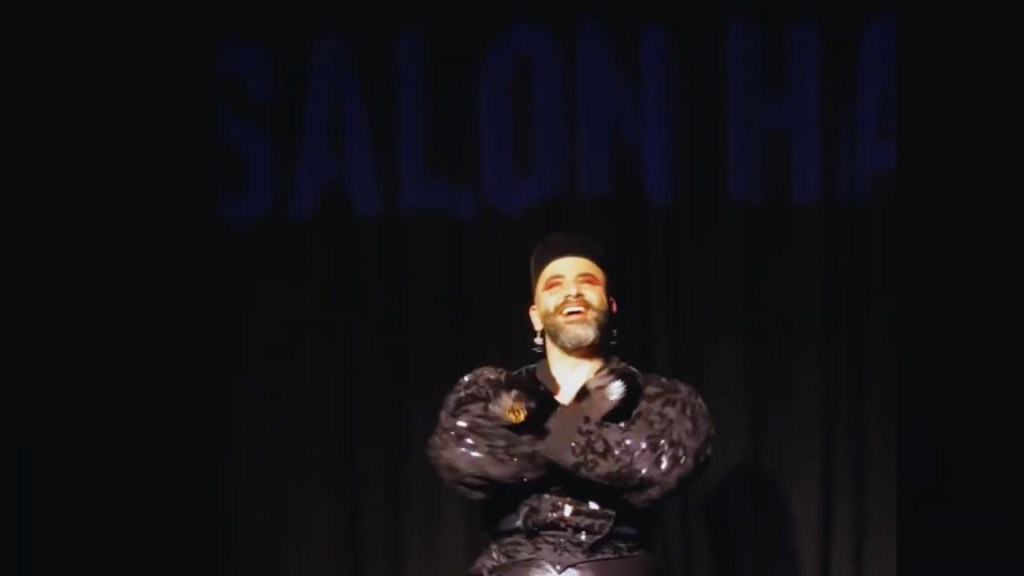
A Message, Mama Ganuush, 2:51 min, Palestine (2026)
Audio: English
Subitles: English
A short documentary film capturing the queer Palestinian voices in exile.
Mama Ganuush is a trans Palestinian performance artist, filmmaker, organizer, and activist whose work is a potent and unflinching expression of Palestinian futurism. Based between San Francisco and Lisbon, their performances are a powerful synthesis of Palestinian folk art and music, the elegance of Egyptian golden-era dance, and the raw, spontaneous energy of clown and theater.
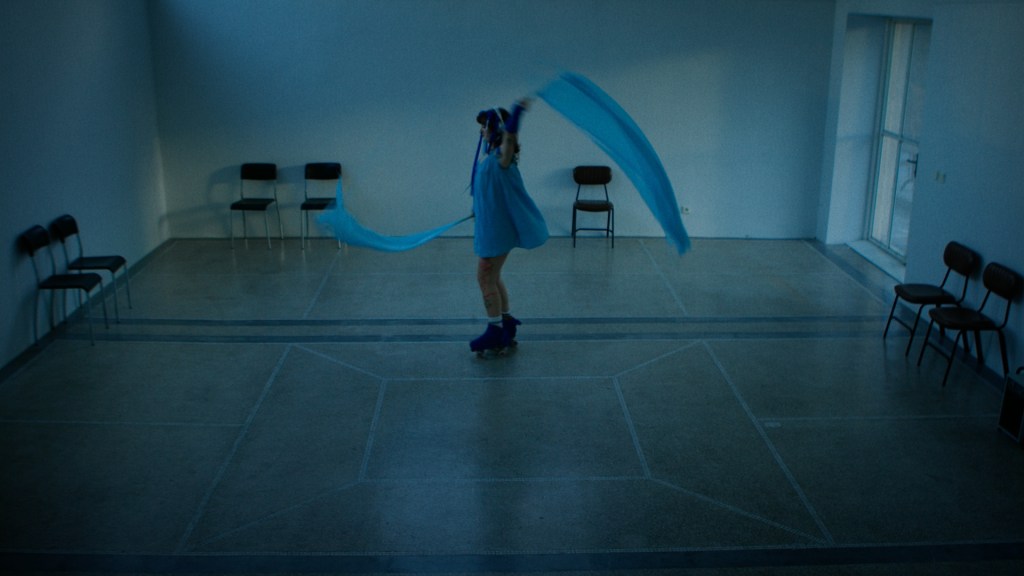
Ceasefire بِكَفِّي قَهْـر , Teodor Vladár, 23 min, Slovakia/Hungary (2025)
Audio: English, Arabic, Slovak
Subitles: English, Slovak
Nawras, a Jordanian-Palestinian queer artist, has been living in Slovakia, Bratislava for the past four years. Living within two communities and clashing cultures, she is pushed towards a third goal; to find peace and a place she can call home. Now, she is reclaiming the culture she was born into, this time, as she chooses to define it, and in doing so, creating a community which becomes her family.
Teodor Vladár is 21 years old and currently studying at the Academy of performing arts in Bratislava, Slovakia. He has studied in Spain and France, the latter being film studies in Paris. He is involved in queer and pro-Palestinian activism and wants to give voices to people by creating documentaries. He is a writer and a screenwriter as well, having won multiple short story competitions in Slovakia. He is also the host of a podcast “Nami o nás”, which focuses on queer identities in world filmography. “Ceasefire” is his directing debut, which he has created with the financial help of a crowdfunding campaign.
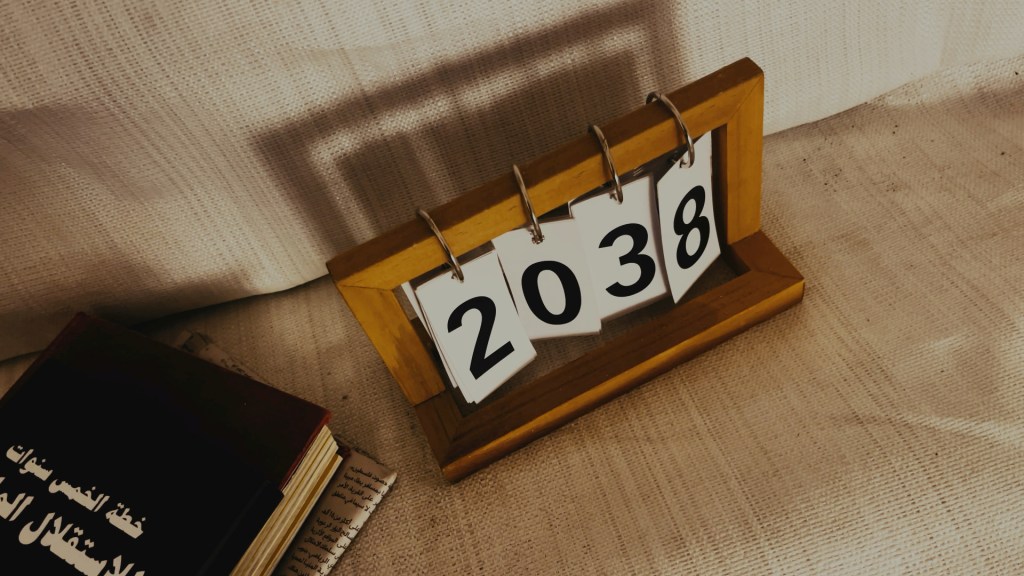
The 5-Year Plan for Financial Independence, Dua Omari, 7 min, Palestine (2025)
Audio: English
Subitles: English
This video reflects on Palestine’s history as a repeating cycle of injustice, imagining a future where the system remains unchanged and violence continues. It exposes the failure of the global system to deliver real justice, offering only symbolic solutions that do not improve daily life. Palestinians are forced to adapt to conditions below basic human dignity, kept in a state of false hope with no clear path to freedom or dignity.
Dua Omari is a visual artist from Jerusalem working across video and painting. She holds degrees in Psychology and Contemporary Visual Arts from Birzeit University. Her practice explores the intersection between the individual psyche and the political and social reality, with a focus on psychological and lived experiences under systems of oppression, particularly those of women, children, and Palestinian society under occupation. She has participated in local and international exhibitions and has completed artist residencies at the Spanish Academy in Rome and the A. M. Qattan Foundation.
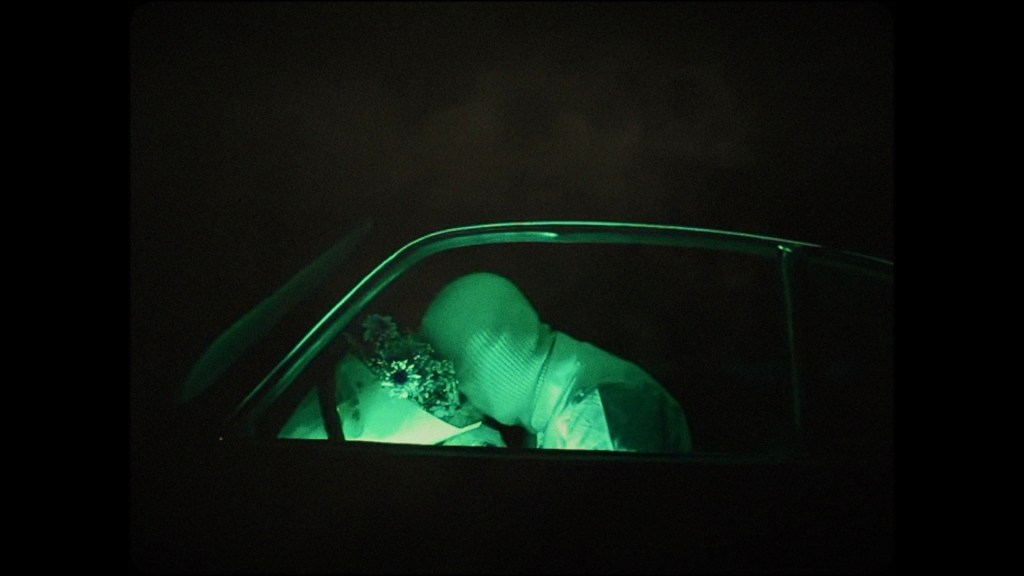
Until We Return, Huss AC, 11 min, Egypt/Scotland (2025)
Audio: English
Subitles: English
Until We Return drifts between memory and dream, moving from the flicker of a sixth birthday on VHS to the final unknowing farewell of a vanished home. Unfolding like a passage along the Nile, through dreamlike currents of Cairo where memory and presence blur, part vision, part yearning, part possibility. Upon its waters, a fragile utopia awakens, a world where separation never came to be, where return is still within reach, and the home once lost flows back into being.
Huss is an Arab multidisciplinary artist, performer, filmmaker, and film programmer based in Glasgow. His work explores queerness, memory, and exile, weaving personal and political narratives that confront displacement, censorship, and survival. Moving across film, performance, installation, and sound, his practice creates space for fragmented histories and silenced voices, challenging dominant narratives around Arab and diasporic experience.
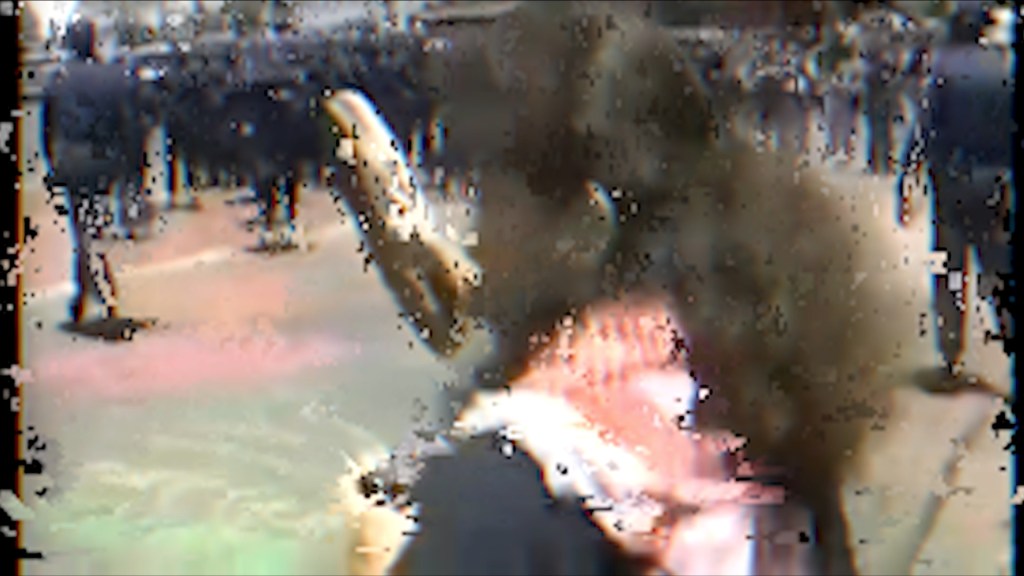
We Will Haunt Your Archive, R.R., 10 min, United States (2026)
Audio: English
Subitles: None
December 2, 2023. A queer protest erupts in San Francisco in solidarity with Palestine.The film situates this action within the longer history of ACT UP’s activism during the AIDS crisis. It explores glitch as a radical feminist tactic for resisting contemporary regimes of surveillance and silencing.
R.R. is a filmmaker, scholar, and multimedia journalist. He has worked as a journalist for international publications such as The Los Angeles Times and broadcast outlets including CNN and Al Jazeera Documentary Channel. His award-winning films have screened at international film festivals and venues such as IDFA, the Centre Pompidou in Paris, and the Pacific Film Archive in Berkeley.
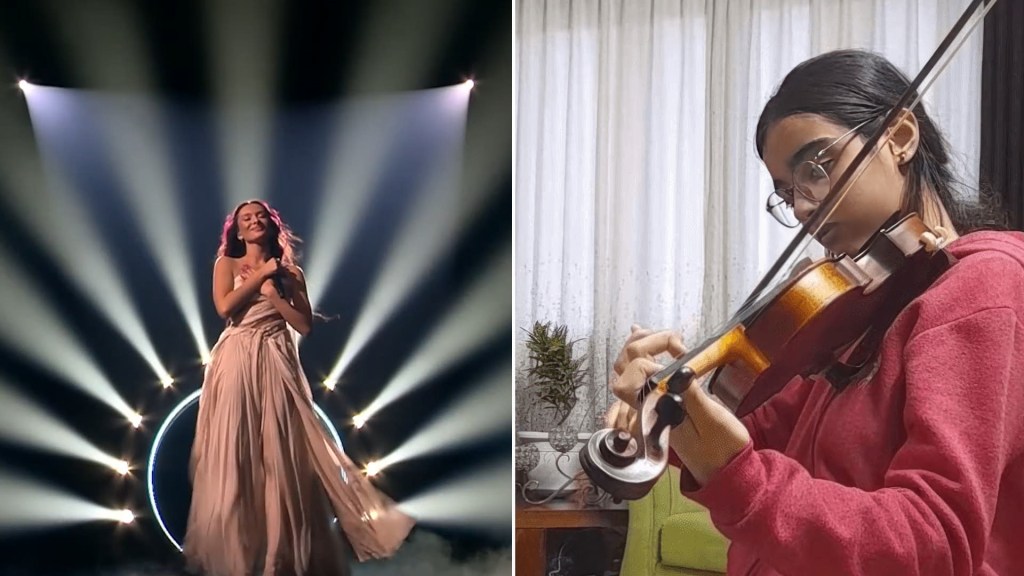
Sorry, John Greyson, 7 min, Canada (2024)
Audio: English
Subitles: English
A portrait of three young women: Luna Alyaan, a young Gaza violinist, killed by an Elbit drone; Eden Golan, a Zionist singer who represented Israel at 2024’s Eurovision in Malmo; and Greta Thunberg, who lead protests at Eurovision that year. A dark satire of Israel’s weaponization of song for hasbara (propaganda) purposes, Sorry uses humour and pop culture to create a mash-up agit-prop in support of the ongoing Eurovision boycott and the Dump Elbit campaign. (Inspired by Toronto Palestine Film Festival’s Gaza Lives tribute to artists lost in the genocide).
John Greyson is an award-winning queer Toronto video/film artist, whose features, shorts and transmedia works include: Unauthorized Amplification Devices (2026), Gauze (2025), Door Prize (2025), Death Mask (2024), Photo Booth (2023), International Dawn Chorus Day (2020), Mercurial (2018), Gazonto (2016), Murder in Passing (2013), Fig Trees (2009), Proteus (2003), Lilies (1996), Zero Patience (1993), The Making of Monsters (1991) and Urinal (1989).
 QUEER CINEMA FOR PALESTINE